Foto 1 di 1
Galleria
Foto 1 di 1

Ne hai uno da vendere?
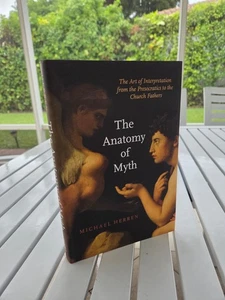
THE ANATOMY OF MYTH BY MICHAEL HERREN 2017 (NEW)

WISDOM SEALS
(9854)
Venditore privato
Condizione:
Oops! Looks like we're having trouble connecting to our server.
Refresh your browser window to try again.
Spedizione:
US $5,99 (circa EUR 5,15) USPS Media MailTM.
Oggetto che si trova a: Deerfield Beach, Florida, Stati Uniti
Consegna:
Consegna prevista tra il gio 11 dic e il lun 15 dic a 94104
Restituzioni:
Restituzioni entro 30 giorni. Le spese di spedizione del reso sono a carico dell'acquirente..
Pagamenti:
Fai shopping in tutta sicurezza
Informazioni sull'oggetto
Il venditore si assume la piena responsabilità della messa in vendita dell'oggetto.
Numero oggetto eBay:406437583535
Specifiche dell'oggetto
- Condizione
- ISBN
- 9780190606695
Informazioni su questo prodotto
Product Identifiers
Publisher
Oxford University Press, Incorporated
ISBN-10
019060669X
ISBN-13
9780190606695
eBay Product ID (ePID)
25038275389
Product Key Features
Number of Pages
248 Pages
Publication Name
Anatomy of Myth : the Art of Interpretation from the Presocratics to the Church Fathers
Language
English
Subject
Folklore & Mythology, History & Surveys / Ancient & Classical
Publication Year
2017
Type
Textbook
Subject Area
Philosophy, Social Science
Format
Hardcover
Dimensions
Item Height
1.1 in
Item Weight
18.3 Oz
Item Length
6.3 in
Item Width
9.3 in
Additional Product Features
Intended Audience
Scholarly & Professional
LCCN
2016-017087
Reviews
"Summing Up: Optional. Lower- and upper-division undergraduates; general readers." --P. E. Ojennus, CHOICE "This book is a superb presentation of approaches to Greek myth from the Presocratics down to the Church Fathers. Michael Herren is Distinguished Research Professor of Classics Emeritus at York University. He offers incisive summaries of Homer and Hesiod, who together formed the Greek equivalent of the Bible. But even more, he focuses on ancient interpreters of Homer and Hesiod and of the cosmos in general. As he points out, many other ancient peoples had their own myths, but they did not have their own interpreters of them. Or at least those interpretations do not survive." --Robert A. Segal, Reading Religion "[Herren] claims to have intended his book for students, including those who have no classical knowledge, and it is indeed blissfully free from academic grandstanding or scholarly jargon. The sweep of the story is wide, and within the summary above there are many enjoyable digressions, such as a chapter on ancient historians discussing such things as the historicity of the Trojan War. A dense subject is made an easy read. But H. has also a serious purpose. He is concerned about the dangers of religious fundamentalism arising from the literalist interpretation of sacred books. His thesis is that the adoption by the Fathers of Greek methods on interpretation, including allegory, enabled the Church to avoid the fundamentalist trap as far as the Renaissance, and that the activity of interpreting authoritative texts, and the freedom to do so, has helped to create 'the society that we currently enjoy'." --Colin McDonald, Classics For All "Building on decades of classroom experience and scholarly research, Herren has produced a lively and original book that traces the evolution of classical myth from its archaic Greek origins down to the fifth C. CE. Both the teacher's irreverent and provocative voice and the scholar's sober one explain how myths are philosophized, allegorized, historicized, and invented. Herren gives Neoplatonic and Christian exegetes and the Jewish and Christian Bible their due. This thoughtful book links the history of myth to timeless and important intellectual issues such as monotheism, atheism, and modern debates on censorship, pornography, and violence."-Danuta Shanzer, University of Vienna "Herren's goal is to shed light on how ancient Greek developments paved the way for the 'open, pluralistic society' of the West today. Hence the main target of the book is a highly topical one: the 'persistence and growth of fundamentalist belief systems in our own times,' in counterpoint with secular forms of modern intellectual engagement with the biggest questions posed by life, and the 'new phenomenon' of a proselytizing atheism. The book resists obvious comparison or competitors, and the length, style, and general tone will work very well with undergraduates especially. A strong recommendation."-John Magee, University of Toronto, "This book is a superb presentation of approaches to Greek myth from the Presocratics down to the Church Fathers Together with a twenty-page glossary, this book is the most useful overview of myth in the ancient world that I have ever read, and I have read many overviews."--Robert A. Segal, Reading Religion "Summing Up: Optional. Lower- and upper-division undergraduates; general readers." --P. E. Ojennus, CHOICE "This book is a superb presentation of approaches to Greek myth from the Presocratics down to the Church Fathers. Michael Herren is Distinguished Research Professor of Classics Emeritus at York University. He offers incisive summaries of Homer and Hesiod, who together formed the Greek equivalent of the Bible. But even more, he focuses on ancient interpreters of Homer and Hesiod and of the cosmos in general. As he points out, many other ancient peoples had their own myths, but they did not have their own interpreters of them. Or at least those interpretations do not survive." --Robert A. Segal, Reading Religion "[Herren] claims to have intended his book for students, including those who have no classical knowledge, and it is indeed blissfully free from academic grandstanding or scholarly jargon. The sweep of the story is wide, and within the summary above there are many enjoyable digressions, such as a chapter on ancient historians discussing such things as the historicity of the Trojan War. A dense subject is made an easy read. But H. has also a serious purpose. He is concerned about the dangers of religious fundamentalism arising from the literalist interpretation of sacred books. His thesis is that the adoption by the Fathers of Greek methods on interpretation, including allegory, enabled the Church to avoid the fundamentalist trap as far as the Renaissance, and that the activity of interpreting authoritative texts, and the freedom to do so, has helped to create 'the society that we currently enjoy'." --Colin McDonald, Classics For All "Building on decades of classroom experience and scholarly research, Herren has produced a lively and original book that traces the evolution of classical myth from its archaic Greek origins down to the fifth C. CE. Both the teacher's irreverent and provocative voice and the scholar's sober one explain how myths are philosophized, allegorized, historicized, and invented. Herren gives Neoplatonic and Christian exegetes and the Jewish and Christian Bible their due. This thoughtful book links the history of myth to timeless and important intellectual issues such as monotheism, atheism, and modern debates on censorship, pornography, and violence."-Danuta Shanzer, University of Vienna "Herren's goal is to shed light on how ancient Greek developments paved the way for the 'open, pluralistic society' of the West today. Hence the main target of the book is a highly topical one: the 'persistence and growth of fundamentalist belief systems in our own times,' in counterpoint with secular forms of modern intellectual engagement with the biggest questions posed by life, and the 'new phenomenon' of a proselytizing atheism. The book resists obvious comparison or competitors, and the length, style, and general tone will work very well with undergraduates especially. A strong recommendation."-John Magee, University of Toronto, "An insightful and accessible analytical overview that so many of us need'. The value of Herren's book should not be underestimated, and I unequivocally recommend it to anyone interested in the history of myth and myth criticism. It is easy and enjoyable to read and filled with a fascinating array of information, making connections that shape into clear and compelling arguments." -- Folklore "This book is a superb presentation of approaches to Greek myth from the Presocratics down to the Church Fathers Together with a twenty-page glossary, this book is the most useful overview of myth in the ancient world that I have ever read, and I have read many overviews."--Robert A. Segal, Reading Religion "Summing Up: Optional. Lower- and upper-division undergraduates; general readers." --P. E. Ojennus, CHOICE "This book is a superb presentation of approaches to Greek myth from the Presocratics down to the Church Fathers. Michael Herren is Distinguished Research Professor of Classics Emeritus at York University. He offers incisive summaries of Homer and Hesiod, who together formed the Greek equivalent of the Bible. But even more, he focuses on ancient interpreters of Homer and Hesiod and of the cosmos in general. As he points out, many other ancient peoples had their own myths, but they did not have their own interpreters of them. Or at least those interpretations do not survive." --Robert A. Segal, Reading Religion "[Herren] claims to have intended his book for students, including those who have no classical knowledge, and it is indeed blissfully free from academic grandstanding or scholarly jargon. The sweep of the story is wide, and within the summary above there are many enjoyable digressions, such as a chapter on ancient historians discussing such things as the historicity of the Trojan War. A dense subject is made an easy read. But H. has also a serious purpose. He is concerned about the dangers of religious fundamentalism arising from the literalist interpretation of sacred books. His thesis is that the adoption by the Fathers of Greek methods on interpretation, including allegory, enabled the Church to avoid the fundamentalist trap as far as the Renaissance, and that the activity of interpreting authoritative texts, and the freedom to do so, has helped to create 'the society that we currently enjoy'." --Colin McDonald, Classics For All "Building on decades of classroom experience and scholarly research, Herren has produced a lively and original book that traces the evolution of classical myth from its archaic Greek origins down to the fifth C. CE. Both the teacher's irreverent and provocative voice and the scholar's sober one explain how myths are philosophized, allegorized, historicized, and invented. Herren gives Neoplatonic and Christian exegetes and the Jewish and Christian Bible their due. This thoughtful book links the history of myth to timeless and important intellectual issues such as monotheism, atheism, and modern debates on censorship, pornography, and violence."-Danuta Shanzer, University of Vienna "Herren's goal is to shed light on how ancient Greek developments paved the way for the 'open, pluralistic society' of the West today. Hence the main target of the book is a highly topical one: the 'persistence and growth of fundamentalist belief systems in our own times,' in counterpoint with secular forms of modern intellectual engagement with the biggest questions posed by life, and the 'new phenomenon' of a proselytizing atheism. The book resists obvious comparison or competitors, and the length, style, and general tone will work very well with undergraduates especially. A strong recommendation."-John Magee, University of Toronto, "[Herren] claims to have intended his book for students, including those who have no classical knowledge, and it is indeed blissfully free from academic grandstanding or scholarly jargon. The sweep of the story is wide, and within the summary above there are many enjoyable digressions, such as a chapter on ancient historians discussing such things as the historicity of the Trojan War. A dense subject is made an easy read. But H. has also a serious purpose. He is concerned about the dangers of religious fundamentalism arising from the literalist interpretation of sacred books. His thesis is that the adoption by the Fathers of Greek methods on interpretation, including allegory, enabled the Church to avoid the fundamentalist trap as far as the Renaissance, and that the activity of interpreting authoritative texts, and the freedom to do so, has helped to create 'the society that we currently enjoy'." --Colin McDonald, Classics For All "Building on decades of classroom experience and scholarly research, Herren has produced a lively and original book that traces the evolution of classical myth from its archaic Greek origins down to the fifth C. CE. Both the teacher's irreverent and provocative voice and the scholar's sober one explain how myths are philosophized, allegorized, historicized, and invented. Herren gives Neoplatonic and Christian exegetes and the Jewish and Christian Bible their due. This thoughtful book links the history of myth to timeless and important intellectual issues such as monotheism, atheism, and modern debates on censorship, pornography, and violence."-Danuta Shanzer, University of Vienna "Herren's goal is to shed light on how ancient Greek developments paved the way for the 'open, pluralistic society' of the West today. Hence the main target of the book is a highly topical one: the 'persistence and growth of fundamentalist belief systems in our own times,' in counterpoint with secular forms of modern intellectual engagement with the biggest questions posed by life, and the 'new phenomenon' of a proselytizing atheism. The book resists obvious comparison or competitors, and the length, style, and general tone will work very well with undergraduates especially. A strong recommendation."-John Magee, University of Toronto, "Building on decades of classroom experience and scholarly research, Herren has produced a lively and original book that traces the evolution of classical myth from its archaic Greek origins down to the fifth C. CE. Both the teacher's irreverent and provocative voice and the scholar's sober one explain how myths are philosophized, allegorized, historicized, and invented. Herren gives Neoplatonic and Christian exegetes and the Jewish and Christian Bible their due. This thoughtful book links the history of myth to timeless and important intellectual issues such as monotheism, atheism, and modern debates on censorship, pornography, and violence."-Danuta Shanzer, University of Vienna "Herren's goal is to shed light on how ancient Greek developments paved the way for the 'open, pluralistic society' of the West today. Hence the main target of the book is a highly topical one: the 'persistence and growth of fundamentalist belief systems in our own times,' in counterpoint with secular forms of modern intellectual engagement with the biggest questions posed by life, and the 'new phenomenon' of a proselytizing atheism. The book resists obvious comparison or competitors, and the length, style, and general tone will work very well with undergraduates especially. A strong recommendation."-John Magee, University of Toronto
TitleLeading
The
Dewey Edition
23
Dewey Decimal
201.3
Table Of Content
TABLE OF CONTENTS Abbreviations Introduction Chapter 1: The Paradigm of the Poets Chapter 2: What Makes a Work Authoritative? Chapter 3: Physis - Redefining the Gods Chapter 4: Flirting with Atheism Chapter 5: Attacking Poetry Chapter 6: The Beginnings of Allegory Chapter 7: Finding History in Myth Chapter 8: Theos - Rediscovering God Chapter 9: The Growth of Allegory Chapter 10: Saving the Poets without Allegory Chapter 11: From Allegory to Symbolism Chapter 12: Greek Exegesis and Judaeo-Christian Books Reflection Bibliography Glossarial Index
Synopsis
The Anatomy of Myth is a comprehensive study of the different methods of interpreting myths developed by the Greeks, adopted by the Romans, and eventually passed on to Jewish and Christian interpreters of the Bible. Greek thinkers only rarely saw "myth" as a category of thought in its own right. Most often they viewed myths as the creation of poets, or else as an ancient revelation that had been corrupted by them. In the first instance, critics attempted to find in the intention of the authors some deeper truth, whether physical or spiritual; in the second, they deemed it necessary to clear away poetic falsehoods in order to recapture an ancient revelation. Parallel to the philosophical critiques were the efforts of early historians to explain myths as exaggerated history; myths could be purified by logos (reason) and rendered believable. Practically all of these early methods could be lumped under the term "allegory"--to intend something different from what one expressed. Only occasionally did philosophers veer from a concern for the literal truth of myths but a few thinkers, while acknowledging myths as fictions, defended their value for the examples of good and bad human behavior they offered. These early efforts were invaluable for the development of critical thinking, enabling public criticism of even the most authoritative texts. The Church Fathers took the interpretative methods of their pagan contemporaries and applied them vigorously to their reading of the scriptures. Pagan Greek methods of myth interpretation passed into the Middle Ages and beyond, serving as a perennial defense against the damaging effects of scriptural literalism and fundamentalism., The Anatomy of Myth is a comprehensive study of the different methods of interpreting myths developed by the Greeks, adopted by the Romans, and eventually passed to Jewish and Christian interpreters of the Bible. Methods of myth interpretation are closely related to developments in Greek philosophy, beginning with the Presocratics in the 6th century B.C.E. and continuing to the Neoplatonists in the fifth century C.E. Greek thinkers only rarely saw 'myth' as a category of thought in its own right. Most often they viewed myths as the creation of poets, especially Homer and Hesiod, or else as an ancient revelation that had been corrupted by them. In the first instance, critics attempted to find in the intention of the authors some deeper truth, whether physical or spiritual; in the second, they deemed it necessary to clear away poetic falsehoods in order to recapture an ancient revelation. Parallel to the philosophical critiques were the efforts of early historians to explain myths as exaggerated history; myths could be purified by logos (reason) and rendered believable. Practically all of these early methods could be lumped under the term 'allegory' - to intend something different from what one expressed. Only occasionally did philosophers veer from a concern for the literal truth of myths; but a few thinkers, while acknowledging myths as fictions, defended their value for the examples of good and bad human behavior they offered. These early efforts were invaluable for the development of critical thinking, enabling public criticism of even the most authoritative texts. The Church Fathers Church took the interpretative methods of their pagan contemporaries and applied them vigorously to their reading of the scriptures. Pagan Greek methods of myth interpretation passed into the Middle Ages and beyond, serving as a perennial defense against the damaging effects of scriptural literalism and fundamentalism., The Anatomy of Myth is a comprehensive study of the methods of interpreting authoritative myths from the Presocratic philosophers to the Neoplatonists and their adoption by the Church Fathers.
LC Classification Number
BL312.H47 2017
Descrizione dell'oggetto fatta dal venditore
Informazioni su questo venditore

WISDOM SEALS
100% di Feedback positivi•19 mila oggetti venduti
Registrato come venditore privatoPertanto non si applicano i diritti dei consumatori derivanti dalla normativa europea. La Garanzia cliente eBay è comunque applicabile alla maggior parte degli acquisti. Scopri di piùScopri di più
Feedback sul venditore (11.009)
- e***l (114)- Feedback lasciato dall'acquirente.Ultimi 6 mesiAcquisto verificatogood seller. item as specified. fast shipping. good communication.
- i***l (62)- Feedback lasciato dall'acquirente.Mese scorsoAcquisto verificatoExtra care with shipping! Good seller. Picture and description match the product that has high quality. Good value and condition is like new.
- o***c (42)- Feedback lasciato dall'acquirente.Ultimi 6 mesiAcquisto verificatoottimo tracciamento. libro corrisponde bene alla descrizione. ottimo packaging. spedizione veloce ed in data TUTTO PERFETTO !!!! TO ALL STAFF MANY CONGRATULATIONS ! THAN YOU SO MUCH INDEED! MUITO OBRIGADO! BEST REGARDS! PEACE AN ALL GOOD! FRA AGOSTINO COLLI FRANCISCAN FATHER MILANO ITALYPASSOS DA PAIXAO O ALEIJADINHO BY RODRIGO JOSE FERREIRA BRETAS 1984 (N° 160968026211)
Vedi altro:
- Libri e riviste di narrativa Autore Michael Crichton,
- Libri e riviste di narrativa Autore Michael Connelly,
- Libri e riviste di narrativa Autore Michael Crichton in italiano,
- Libri e riviste di narrativa Autore Michael Crichton in inglese,
- Libri e riviste di narrativa tascabili Autore Michael Crichton,
- Libri e riviste di narrativa copertine rigide Autore Michael Crichton,
- Libri e riviste di narrativa Autore Michael Crichton prima edizione,
- Libri e riviste di narrativa The Walking Dead,
- Libri e riviste di narrativa Autore Michael Crichton, tema thriller,
- Libri e riviste di narrativa Autore Michael Crichton, tema gialli e thriller
WISDOM SEALS
100% di Feedback positivi•19 mila oggetti venduti
Registrato come venditore privatoPertanto non si applicano i diritti dei consumatori derivanti dalla normativa europea. La Garanzia cliente eBay è comunque applicabile alla maggior parte degli acquisti. Scopri di piùScopri di più
Feedback sul venditore (11.009)
- e***l (114)- Feedback lasciato dall'acquirente.Ultimi 6 mesiAcquisto verificatogood seller. item as specified. fast shipping. good communication.
- i***l (62)- Feedback lasciato dall'acquirente.Mese scorsoAcquisto verificatoExtra care with shipping! Good seller. Picture and description match the product that has high quality. Good value and condition is like new.
- o***c (42)- Feedback lasciato dall'acquirente.Ultimi 6 mesiAcquisto verificatoottimo tracciamento. libro corrisponde bene alla descrizione. ottimo packaging. spedizione veloce ed in data TUTTO PERFETTO !!!! TO ALL STAFF MANY CONGRATULATIONS ! THAN YOU SO MUCH INDEED! MUITO OBRIGADO! BEST REGARDS! PEACE AN ALL GOOD! FRA AGOSTINO COLLI FRANCISCAN FATHER MILANO ITALYPASSOS DA PAIXAO O ALEIJADINHO BY RODRIGO JOSE FERREIRA BRETAS 1984 (N° 160968026211)